




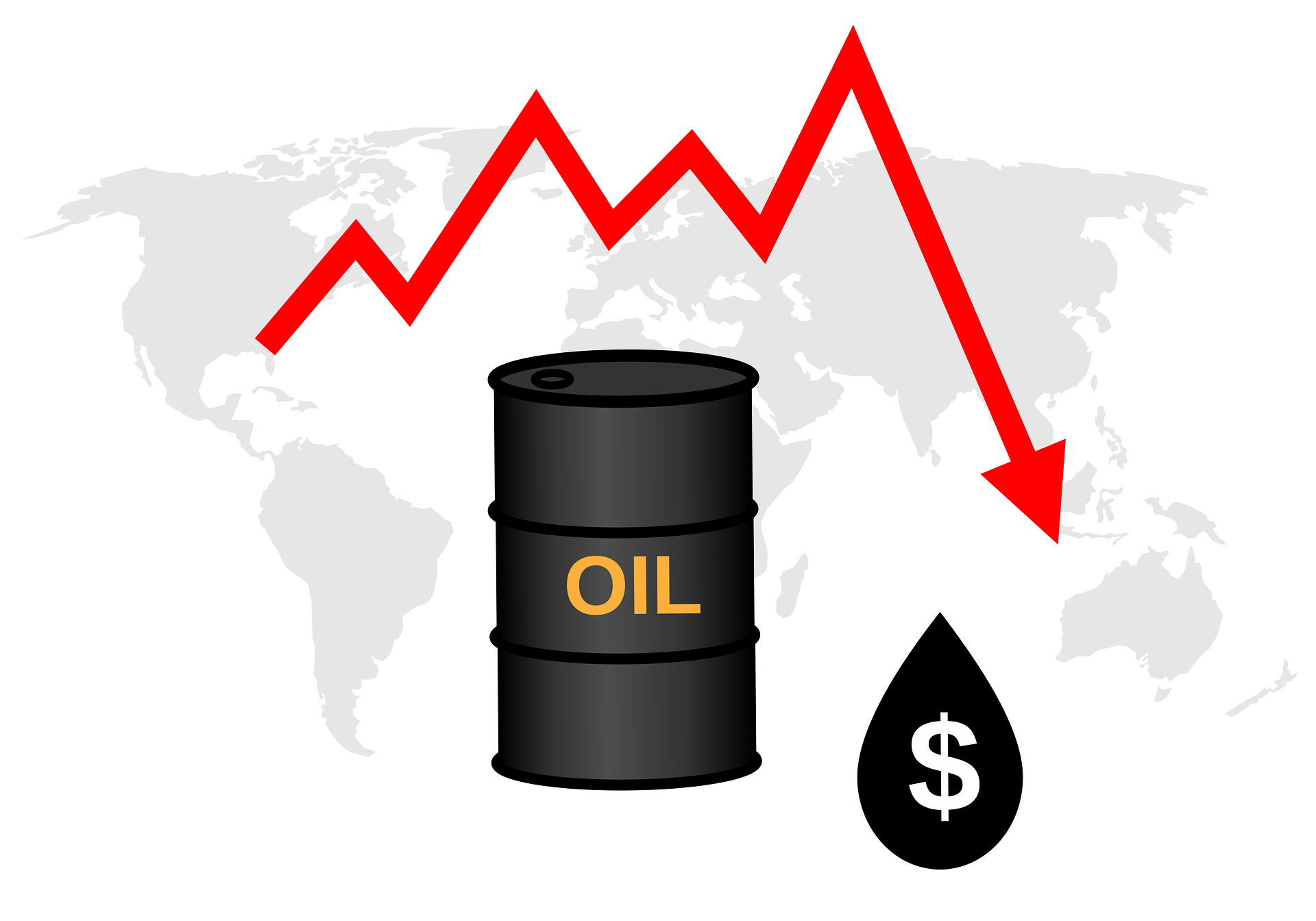
The oil crisis between roots and horror (2)
Before I begin to talk about the liquidation of futures contracts, in order to continue our conversation about futures contracts and the oil crisis, I would like to pray to God Almighty to remove the distress from the nation, and protect us from all other diseases, whether we know of them or what we do not know about.
We have previously pointed out that futures contracts, in terms of liquidating contractors’ positions, are represented in three forms: The first way is to implement the forward contract as it is when its due date comes, while the second way is to liquidate the contract that has expired with an opposite contract, which is the focus of our discussion for today.
By the opposite contract, we mean that the contractor reverses his position in the previous contract with a subsequent contract, and it appears to us that the purpose of the contract is to hedge against the potential physical loss as a result of price fluctuations. The basic idea is to fix the price of the asset subject to the contract in the future. So that the contractors can determine their financial positions and control future expenses in the interest of their respective general budgets.
In its practical aspect, this process is based on the position of the contractor in the contract, whether he is a seller or a buyer, and its details are as follows:
As for the seller in the forward contract in the basic form, it is his responsibility to deliver the sold item and liquidate his position in the contract, but the diligent effort to hedge and control With the loss, find another way to reduce it by concluding an opposite contract that is identical to the first contract in terms of quantity, origin, and delivery date, but it differs in terms of price, so it is at the market price at the time of contracting.
This description supports two assumptions: the first assumption is that the seller does not own the item sold at the time of the deferred contract (the original contract), and the second assumption is that the seller owns the item sold at the time of contracting, but he saw that the signs of his loss were beginning to become clear, or that his current profit is sufficient for him and he wants to secure this profit.
As for the first assumption, it is a matter of jurisprudential disagreement regarding the legal description of it. Selling someone else’s property in Islamic jurisprudence is defined as a curious sale, and there is also selling what you do not own. The distinguishing feature between these two types of sales is that a curious sale is based on disposing of property owned by someone else, either for his own benefit or for the benefit of the owner of the property. The owner of the money is known, and thus ignorance about the item being sold is removed. As for selling what you do not have, it is based on a different basis. The seller here does not own the item sold, and does not know it before the buyer asks for it. That is, the buyer may ask for a saa’ of wheat, or he may ask for cooking utensils, or he may ask for an animal to ride, and so on, so the seller contracts with him on A certain price, then he goes to the market to buy it and deliver it to him. This is what the prohibition contained in what was narrated on the authority of Hakim Ibn Hazm – may God be pleased with him – who said: “I asked the Prophet, peace and blessings of God be upon him, and I said: O Messenger of God, a man comes to me and asks me for a sale that I do not have, so I sell it from him, then I buy it for him from the market.” He said: Do not sell what you do not have. Narrated by Abu Dawud, and this hadith was mentioned in several ways, including some with an uninterrupted chain of transmission. Al-Bukhari cited a hadith in this section – selling what you do not have – which was narrated by Ibn Abbas, may God be pleased with them both, when he said: (As for what the Prophet, peace and blessings of God be upon him, forbade, it is food to be sold until it is taken. Ibn Abbas said, “I do not consider everything except its like.”) Narrated by Al-Bukhari. It appears to us that the word “you” means possession and seizure, not establishing ownership in the debt. As evidenced by Ibn Abbas’s saying: “And I do not consider everything except its like”; For example, the disposal of the deposit by the holder of the deposit is permissible with prior permission or subsequent permission, depending on the circumstances. The ownership of the deposit has not remained in his possession, as possession has remained in his possession. However, in his behavior, he descends to the status of a curious person unless he is given permission, so he becomes like an agent.
As for the second assumption, which is related to securing profit or limiting loss, which is the common motive among traders in futures contracts, this is the nature of concluding two contracts that are different in nature and price, and identical in value, date, and quantity. This is a separate contract from the first contract, but we must distinguish between two assumptions: The seller owns the item sold, so the subsequent contract represents an investment in it, different from the first contract. However, if the purchase contract subsequent to the sales contract is intended to provide the item agreed upon in the first sale, then this is grounds for suspicion and doubt. As for the buyer, his situation is the same as the seller’s situation, if a subsequent sales contract was concluded before Receipt, unless the deferred sale contract is considered an executive document representing the same thing sold, here we distinguish between two cases:
– If the sale takes place before liquidation, then the set-off rule is taken into account.
– If the sale takes place during liquidation, it is considered a transfer of right.
We stop at this point with the hope of meeting you later, God willing, to complete the topic of establishing futures contracts, asking God Almighty to protect you from all harm, and do not forget, dear reader, that your adherence to preventive instructions is a national duty in which you should not fail.